User interfaces
Onedata offers multiple interfaces to manage and access user data: Web GUI, REST API, CDMI API, fuse-based POSIX mount, Python libraries, or S3. Regardless of the interface, the user gets the same, unified view of all his data.
Web GUI
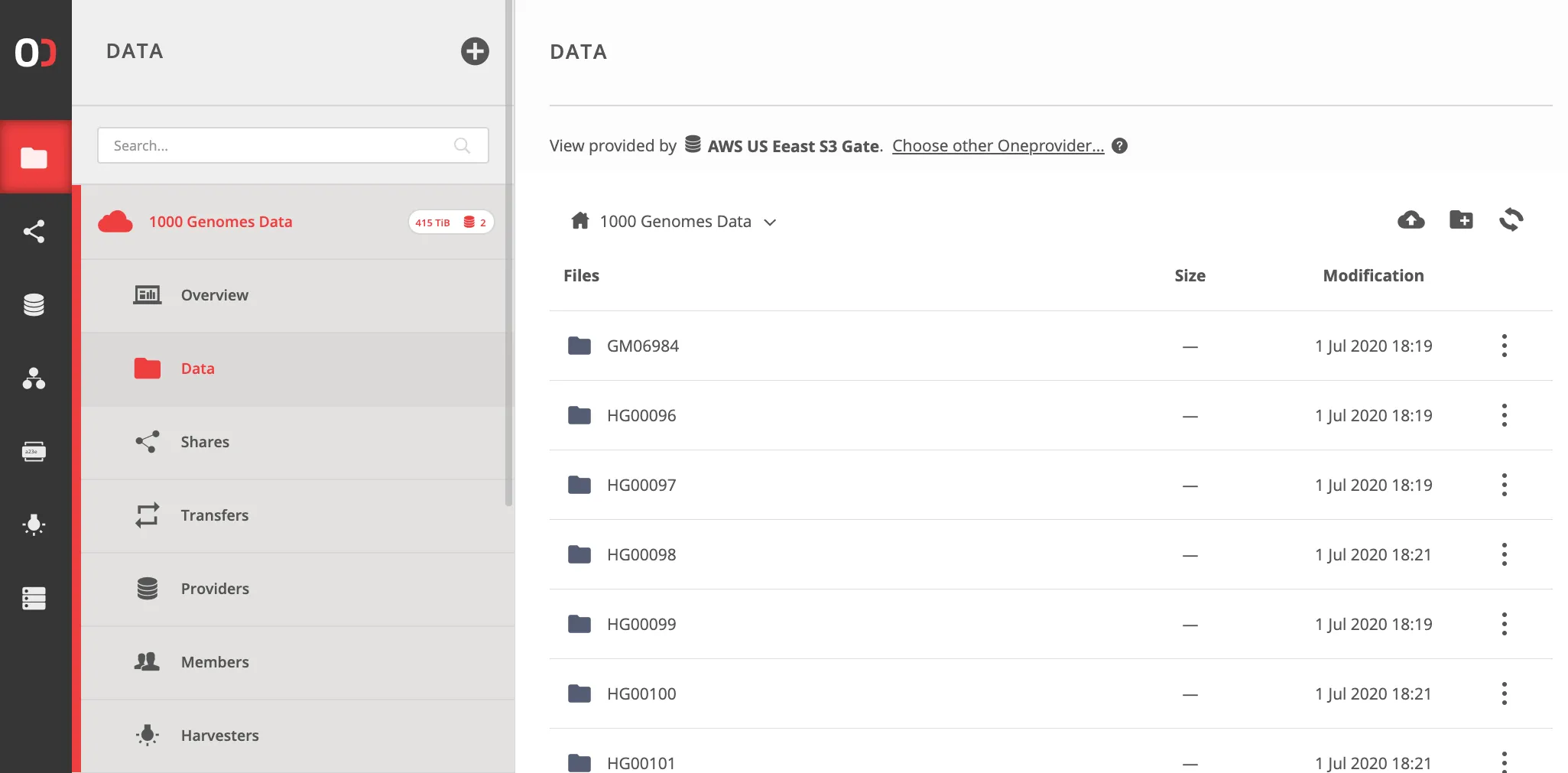
This rich graphical interface can be used for all data management tasks and is designed to be intuitive for non-computer-savvy users with basic needs, while offering advanced features for skilled personnel, such as data stewards, developers, or administrators.
Oneclient — native POSIX mount
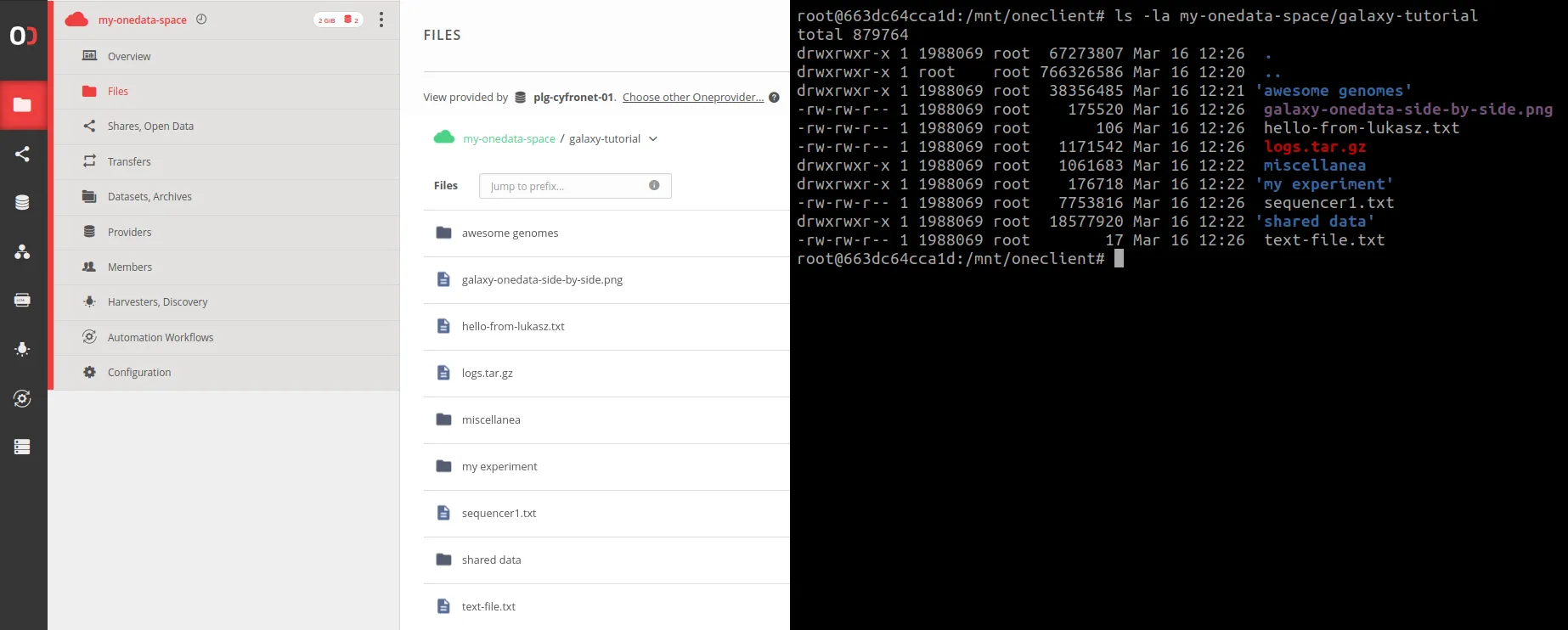
The Oneclient application allows mounting your Onedata Spaces in a Linux filesystem, so that the data can be accessed as if it resided in the local filesystem. Oneclient is based on the Fuse (Filesystem in Userspace) library and proves useful in many scenarios:
- convenient access using a personal laptop from any place with Internet connection,
- high-performance access in computing environments — the filesystem can be mounted on a worker node and processed interactively or using jobs,
- accessing the data via the command-line interface (terminal),
- accessing and processing the data using specialized software.
Administrator Web interface
Dedicated web interface for installation and management of Oneprovider and Onezone services.
API
Onedata offers a RESTful interface, which can be used for integration with other services, creating middleware, and automating repetitive processes.
Other interfaces
All available interfaces, including Python libraries, S3 endpoint, and CDMI API, are described in a dedicated chapter.